We use cookies to make your experience better. To comply with the new e-Privacy directive, we need to ask for your consent to set the cookies. Learn more.

Supermicro L2A Sidecar CDU: 200 kW Liquid-to-Air Cooling for Air-Cooled Data Centers
Posted:
July 01, 2026
Categories:
General Topics and News
Supermicro L2A Sidecar CDU
Liquid-to-Air · 200 kW
No facility water loop
N+1 redundant pumps
DCBBS cooling
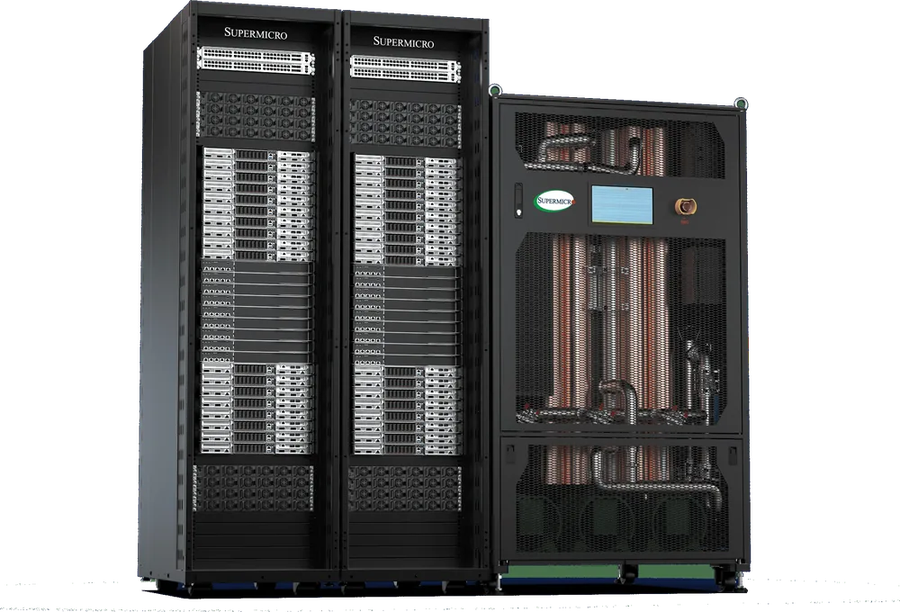
Many AI and HPC teams are ready to deploy dense GPU racks, but their data center cooling infrastructure is not. Traditional air cooling cannot support modern high-density racks, while full facility liquid cooling can take months to plan and implement. The Supermicro L2A (Liquid-to-Air) Sidecar CDU solves this gap by bringing up to 200 kW of liquid cooling into an existing air-cooled room, without requiring a primary facility water loop.
Short answer
The L2A Sidecar CDU is a standalone, closed-loop coolant distribution unit that delivers up to 200 kW of liquid cooling to a high-density AI or HPC rack while rejecting heat into the room's existing air — so you can adopt direct liquid cooling in an air-cooled facility with no cooling tower and no primary water loop. The LCS-SCDU-200AR001 uses N+1 redundant pumps with an Automatic Transfer Switch, redundant power supplies, VFD-controlled fans, and supports Redfish, SNMP, RESTful API, a touchscreen and SuperCloud Composer for management.
Why this matters for infrastructure buyers
Most data centers are still air-cooled, but a single GPU rack can now exceed what air alone can carry. The L2A Sidecar lets you deploy liquid-cooled AI hardware in that existing room today — retrofit or new build — without waiting on a facility water project. The question is no longer "air or liquid", but how to bridge the two: how many kW per rack you need to remove, whether your room can reject that heat to air, and how the Sidecar fits the rest of your cooling roadmap.
Best fit for
- Existing air-cooled data centers that need liquid cooling without a primary water loop.
- AI and HPC rack deployments where GPU density is moving beyond what air alone can remove.
- Retrofit projects that need faster deployment before a larger facility upgrade.
- Teams that want a validated CDU, GPU server and rack configuration from one partner.
Not ideal for
- Rooms that cannot absorb the rejected heat from the Sidecar into the existing air path.
- Sites that already have a primary water loop and need maximum liquid-to-liquid density.
- Low-density racks where conventional air cooling still has enough headroom.
- Loads above 200 kW per rack without additional planning or multiple cooling units.
Why buy through SERVER SIMPLY?
SERVER SIMPLY helps European teams size the L2A Sidecar CDU to the real heat load of their GPU servers, configure the rack and cooling as one system, validate lead times before purchase, and coordinate EU delivery and integration. The goal is not only to buy a CDU, but to deploy a working AI/HPC rack with the right cooling design.
What it is
A self-contained liquid-to-air CDU that sits next to the rack, runs a closed coolant loop to the servers and dumps the heat into room air — no facility water required.
Who should read this
Teams adding high-density AI or HPC racks to air-cooled rooms who need liquid cooling fast, with minimal disruption to existing facility infrastructure.
Need liquid cooling without facility water?
Send us your rack heat load and we will return a validated Supermicro L2A Sidecar CDU plus GPU rack configuration for your site.
On this page
11-minute read- Best fit / not ideal for
- Why air-cooled data centers need liquid-to-air
- What is the L2A Sidecar CDU?
- How liquid-to-air closed-loop cooling works
- LCS-SCDU-200AR001 specifications
- Redundancy, power and management
- Where it fits in Supermicro DCBBS cooling
- Which cooling option should you choose?
- When the L2A Sidecar is not the fit
- How SERVER SIMPLY helps you deploy
- FAQ
Why air-cooled data centers need liquid-to-air
For two decades, the data center default was air: raised floors, hot and cold aisles, CRAC units. That model works until rack power density climbs. A modern AI training rack can draw tens of kilowatts, and the latest GPU systems push well beyond what room air can physically remove from a single rack. At that point, air cooling either throttles the hardware or forces racks to be spread thin and half-empty.
Direct liquid cooling solves the density problem, but full facility liquid — cooling towers, primary water loops, building plumbing — is a major capital project that can take months to a year. The L2A Sidecar CDU closes that gap. It delivers liquid cooling to the rack while rejecting the heat into the air the room already handles, so you can run dense AI hardware now and plan the larger facility upgrade on your own timeline.
This is also where SERVER SIMPLY fits: our AI infrastructure consultation helps European teams decide what to deploy now versus what to plan for the facility roadmap, then configure the cooling, liquid-cooled rack solutions and GPU servers for AI and HPC together as one balanced system rather than separate purchases.
Air-cooled room, GPU rack waiting?
Share the planned server models or rack heat load and SERVER SIMPLY will check whether the L2A Sidecar is the right bridge to liquid cooling.
What is the L2A Sidecar CDU?
The L2A Sidecar CDU (model LCS-SCDU-200AR001) is a coolant distribution unit that stands beside the IT rack as a "sidecar". It circulates coolant through the servers in a closed loop, carries the captured heat back into the Sidecar's internal liquid-to-air heat exchanger, and uses built-in fans to reject that heat into the room — exactly the air path the facility is already designed for. Because the loop is fully contained in the unit, there is no connection to the facility's primary water system.

The L2A Sidecar CDU front panel: touchscreen control and web UI, EMO safety switch, and the internal liquid-to-air heat-exchanger coil bank with VFD-driven fans.
The flexible, standalone design is built for fast deployment in both retrofit and new AI/HPC clusters, minimizing downtime and infrastructure changes. In practice it means you can bring a liquid-cooled rack online in an existing air-cooled room without breaking ground on new facility water infrastructure.
How liquid-to-air closed-loop cooling works
The Sidecar combines three ideas that make liquid cooling safe and efficient in an air-cooled room: an isolated loop, intelligent fans, and full visibility into the cooling system.
Closed-loop isolation
The coolant loop is sealed inside the rack and Sidecar, fully isolated from the facility's primary water system. This prevents cross-contamination and leakage into adjacent IT equipment, keeping operation reliable and maintenance-friendly.
VFD energy efficiency
Variable Frequency Drives adjust fan speed in real time to match the actual thermal load, cutting power draw when full cooling is not needed — greener, lower-cost operation than fixed-speed air cooling.
Centralized management
A built-in touchscreen and web UI expose temperature, pressure, flow rate and pump status in real time, with Redfish, SNMP and SuperCloud Composer for integration into existing data-center platforms.
LCS-SCDU-200AR001 specifications
The headline numbers below are high-density cooling in an air-rejecting package: 200 kW of cooling from a single self-contained unit that needs power and floor space, not a water main.
200 kW
Cooling capacity per unit
N+1
Redundant pumps with ATS
19 kW
Max power consumption
0
Facility water loops needed
Application type
Liquid-to-Air (L2A) deployment
Footprint (W × D × H)
1,100 × 1,415 × 2,000 mm
Weight (without coolant)
1,145 kg
Management
Touchscreen + Web UI + SuperCloud Composer
| Specification | L2A Sidecar CDU — LCS-SCDU-200AR001 |
|---|---|
| Application type | Liquid-to-Air (L2A) deployment |
| Cooling capacity | 200 kW |
| Redundancy | N+1 redundant pumps with Automatic Transfer Switch (ATS) |
| Power continuity | Redundant power supply units (PSUs) |
| Power consumption (max) | 19 kW |
| Dimensions (W × D × H) | 1,100 × 1,415 × 2,000 mm |
| Weight | 1,145 kg (without coolant) |
| Fan control | Variable Frequency Drive (VFD) speed optimization |
| Protocols | SNMP v2c, Ethernet/Web-based UI, Redfish, RESTful API |
| Management | Touchscreen, Web UI, Supermicro SuperCloud Composer (SCC) |
Get an EU-ready LCS-SCDU-200AR001 configuration
SERVER SIMPLY can validate the Sidecar against your rack heat load, GPU servers, power, redundancy and monitoring requirements before purchase.
Redundancy, power and management
Cooling a dense AI rack is mission-critical: if the loop stops, the hardware stops. The Sidecar is built so a single failure does not take cooling offline. N+1 redundant pumps with an Automatic Transfer Switch keep coolant flowing if a pump fails, and redundant PSUs maintain cooling through power disruptions. Real-time monitoring of temperature, pressure, flow rate and pump status — surfaced on the touchscreen, web UI and through Redfish/SNMP — gives operators early warning before a small issue becomes an outage.
Where it fits in Supermicro DCBBS cooling
The L2A Sidecar is one option in Supermicro's Data Center Building Block Solutions (DCBBS) cooling portfolio. The right choice depends on how much heat you need to remove per rack and whether you want to keep it inside the room or reject it at facility scale. The Sidecar is the "liquid cooling without facility water" answer; the units below cover the rest of the spectrum.

In-Rack CDU
A compact CDU that mounts inside the rack itself, connecting to a facility water loop — ideal when liquid infrastructure already exists and you want to save floor space.

In-Row CDU
A larger cabinet that sits in the row and feeds multiple racks from a facility water loop — higher aggregate capacity for full liquid-cooled rows.
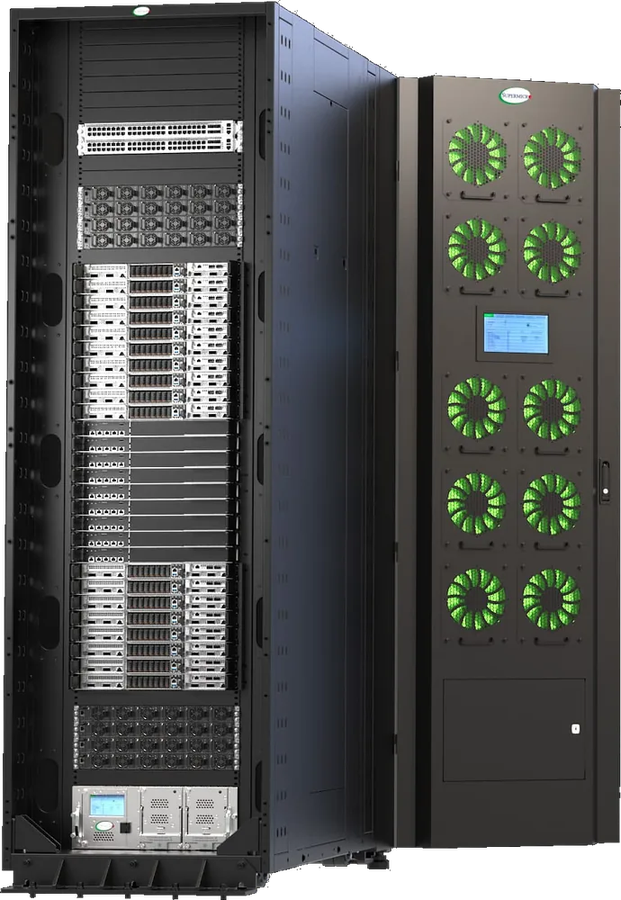
Rear Door Heat Exchanger
A liquid-cooled door that replaces the rack's rear panel and captures heat as air passes through — a clean way to lift the density of an otherwise air-cooled rack.
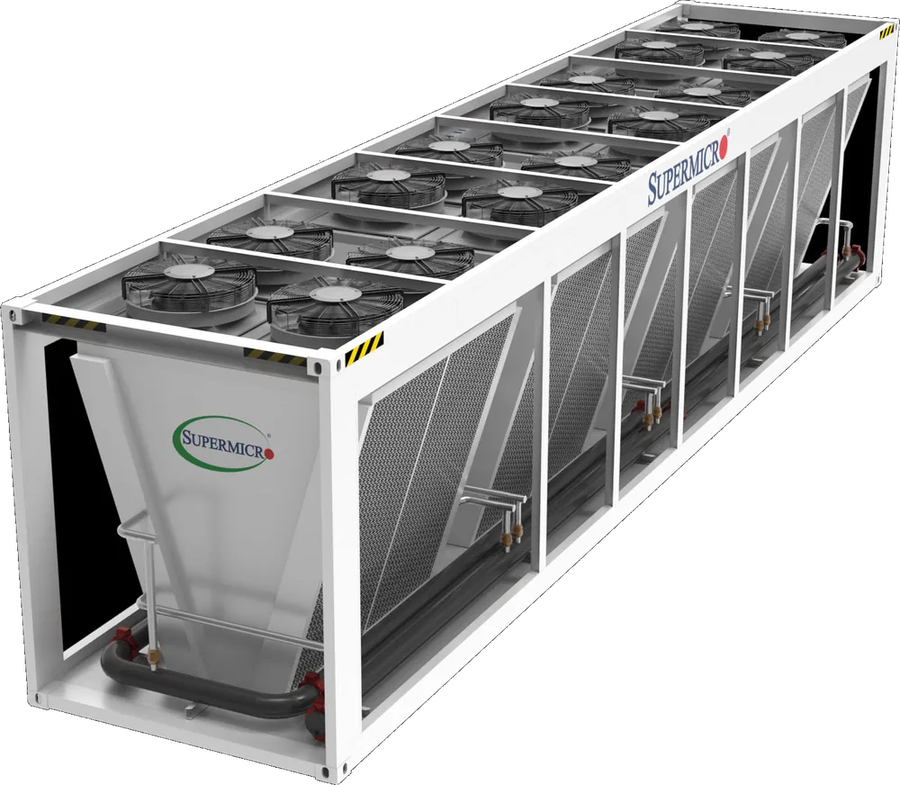
Dry Cooler
A facility-scale, water-free heat-rejection unit that cools the primary loop using ambient air — for sites that want liquid cooling without evaporative water use.

Water Cooling Tower
Evaporative facility-scale heat rejection for the highest-capacity deployments, where a full primary water loop is the right long-term investment.
Which cooling option should you choose?
Use this decision table to see where the L2A Sidecar fits against In-Rack CDUs, In-Row CDUs, rear door heat exchangers and facility heat-rejection options.
| Solution | Needs facility water? | Best for | Deployment complexity | Main limitation |
|---|---|---|---|---|
| L2A Sidecar CDU | No | Fast liquid cooling retrofit in an air-cooled room | Medium | Heat is rejected into room air, so room air-handling must have headroom |
| In-Rack CDU | Yes | Sites with an existing water loop and single-rack density needs | Medium/high | Requires liquid infrastructure and consumes rack space |
| In-Row CDU | Yes | Multi-rack liquid-cooled rows or clusters | High | More facility planning, plumbing and integration work are needed |
| Rear Door Heat Exchanger | Usually yes | Increasing rack density without full server liquid cooling | Medium | Does not solve every direct-to-chip cooling need |
| Dry Cooler / Cooling Tower | Facility level | Large-scale heat rejection for liquid-cooled rows or halls | High | Bigger infrastructure project with more site planning |
L2A Sidecar vs In-Rack CDU
Choose the L2A Sidecar when the rack needs liquid cooling but the site has no facility water loop. Choose an In-Rack CDU when primary water already exists and you want liquid-to-liquid cooling inside the rack footprint.
Liquid-to-Air vs Liquid-to-Liquid CDU
Liquid-to-air rejects heat into room air for faster retrofit projects. Liquid-to-liquid transfers heat into a facility loop, which is better for larger deployments but requires more infrastructure work up front.
When the L2A Sidecar is not the right fit
The L2A Sidecar is purpose-built to bridge air-cooled rooms to liquid cooling. It is the wrong starting point in several cases.
- You already have a facility water loop: If primary water is in place, an In-Rack or In-Row CDU connected to that loop is usually more efficient and denser than rejecting heat back to room air.
- Heat loads above 200 kW per rack: A single Sidecar tops out at 200 kW. Beyond that, plan multiple units or a facility liquid-to-liquid design.
- Low-density racks: If your racks stay within what room air comfortably handles, conventional air cooling is more cost-effective than adding a CDU.
- Rooms that cannot absorb the rejected heat: The Sidecar dumps heat into the room. If the facility's air-handling cannot take the extra load, a facility-scale heat-rejection plan comes first.
- Projects that need facility-scale heat rejection from day one: If the target design is already a multi-rack liquid-cooled row or hall, start with the facility loop, CDU topology and heat-rejection plant before choosing the rack-level cooling unit.
How SERVER SIMPLY helps you deploy
Cooling and compute are one decision, not two. SERVER SIMPLY helps European teams size the L2A Sidecar CDU to the real heat load of their GPU servers, choose between Sidecar, In-Rack/In-Row CDU and facility heat rejection, and configure the rack enclosures around them. We handle EU delivery, integration testing and binding lead times on quote, so the cooling and the hardware arrive validated as one system.
What to send us for a quote
- Rack heat load in kW, or the planned GPU/server models.
- Retrofit or new-build deployment.
- Whether a facility water loop is available.
- Room air-handling capacity or known cooling limits.
- Required delivery timeline.
- Target country and site location.
- Any rack, power, redundancy or monitoring requirements.
Get an EU-ready Supermicro L2A Sidecar configuration
Tell us your rack heat load and facility constraints and we will return a cooling-plus-compute configuration, EU delivery plan and binding lead times.
Sources
- Supermicro Liquid Cooling Solutions
- Supermicro Data Center Building Block Solutions (DCBBS)
- Supermicro L2A Sidecar CDU Datasheet (LCS-SCDU-200AR001), DCBBS Datasheet series, © 2026 Super Micro Computer, Inc.
Liquid cooling for AI clusters
CDU sizing, facility requirements and the TCO case for direct liquid cooling at AI density.
Read the cooling guideAI infrastructure consultation
Talk through rack heat load, facility limits, GPU server options and EU lead times with the SERVER SIMPLY infrastructure team.
Plan an AI infrastructure consultationLiquid-cooled rack solutions
See how rack-scale AI infrastructure combines compute, cooling, power and networking into deployable building blocks.
Explore liquid-cooled rack solutionsSupermicro DCBBS Blueprints
How Supermicro builds full AI factories from validated blocks — compute, cooling, power and networking.
Explore DCBBS BlueprintsGPU servers for AI and HPC
The full SERVER SIMPLY catalog of NVIDIA and AMD GPU servers that the Sidecar is built to cool.
Browse GPU servers for AI and HPCRack enclosures for high-density AI
Rack and enclosure options for high-density, liquid-cooling-ready AI infrastructure.
Configure rack enclosuresFAQ
What is the Supermicro L2A Sidecar CDU?
It is a standalone, closed-loop coolant distribution unit that delivers up to 200 kW of liquid cooling to a rack and rejects the heat into room air — enabling liquid cooling in air-cooled data centers without cooling towers or facility water loops.
How much heat can the L2A Sidecar remove?
Up to 200 kW per unit (model LCS-SCDU-200AR001), enough to cool a high-density AI or HPC rack while drawing a maximum of 19 kW of power itself.
Does it need facility water?
No. The coolant loop is fully closed and contained in the rack and Sidecar, isolated from the facility's primary water system, so no cooling tower or primary water loop is required.
What is liquid-to-air (L2A) cooling?
Liquid cools the servers in a closed loop, then a built-in liquid-to-air heat exchanger and fans transfer that heat into the room's air — combining the density of liquid cooling with the simplicity of air rejection.
Can I retrofit it into an existing air-cooled data center?
Yes. The flexible, standalone design is built for fast deployment in both retrofits and new AI/HPC clusters, minimizing downtime and infrastructure changes.
How is redundancy and uptime handled?
N+1 redundant pumps with an Automatic Transfer Switch keep coolant flowing if a pump fails, and redundant power supply units maintain cooling through power disruptions.
What management protocols does it support?
SNMP v2c, an Ethernet/web-based UI, Redfish and a RESTful API, plus a built-in touchscreen and Supermicro SuperCloud Composer for centralized monitoring and control.
How does it compare to In-Rack and In-Row CDUs?
In-Rack and In-Row CDUs connect to a facility water loop for liquid-to-liquid cooling, while the L2A Sidecar rejects heat to air and needs no facility water — making it the better fit when primary water is not available.
How big and heavy is the unit?
It measures 1,100 × 1,415 × 2,000 mm (W × D × H) and weighs 1,145 kg without coolant, sitting beside the rack as a sidecar.
Can SERVER SIMPLY supply and deploy the L2A Sidecar CDU in Europe?
Yes. We help European customers size the Sidecar to their rack heat load, configure the matching GPU servers and racks, and handle EU delivery, integration testing and binding lead times on quote.
Comment(s)