We use cookies to make your experience better. To comply with the new e-Privacy directive, we need to ask for your consent to set the cookies. Learn more.

General Topics and News
-
Posted: August 10, 2026Categories: General Topics and NewsRead more »
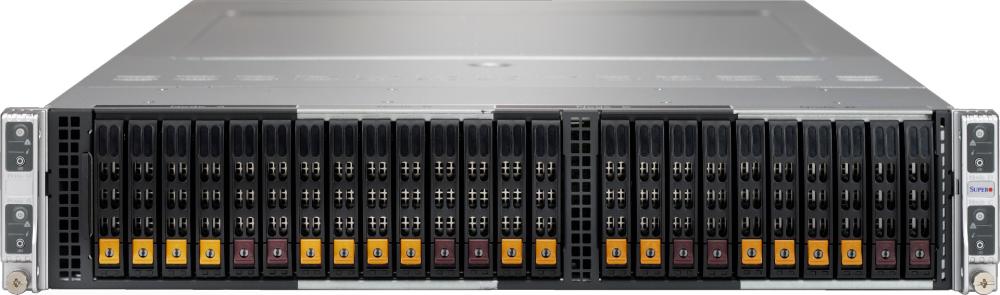 AF-4 vs AF-6 vs AF-8 OSA vs ESA Usable capacity math
vSAN ReadyNode profiles look like model numbers, but AF-4, AF-6 and AF-8 are performance classes — and picking by name alone is how clusters end up over-bought on compute and under-bought on storage. This guide decodes the profiles, explains when hybrid still makes sense and why ESA changes the hardware question, and walks through the capacity math that turns raw terabytes into what your VMs can actually use.
Why it matters
Raw TB is not usable TBThe storage policy decides the budget: 100 TB raw is 50 TB usable with RAID-1 mirroring, 33 TB at FTT=2 — and up to 80 TB with RAID-5 erasure coding, if the cluster has enough hosts.
What the guide covers
From profile to quoteProfile-by-profile comparison, hybrid vs all-flash, OSA vs ESA host minimums, a full sizing walkthrough and the exact inputs to send us for a Supermicro ReadyNode configuration with confirmed EU lead time.
-
Posted: August 03, 2026Categories: AI InfrastructureRead more »
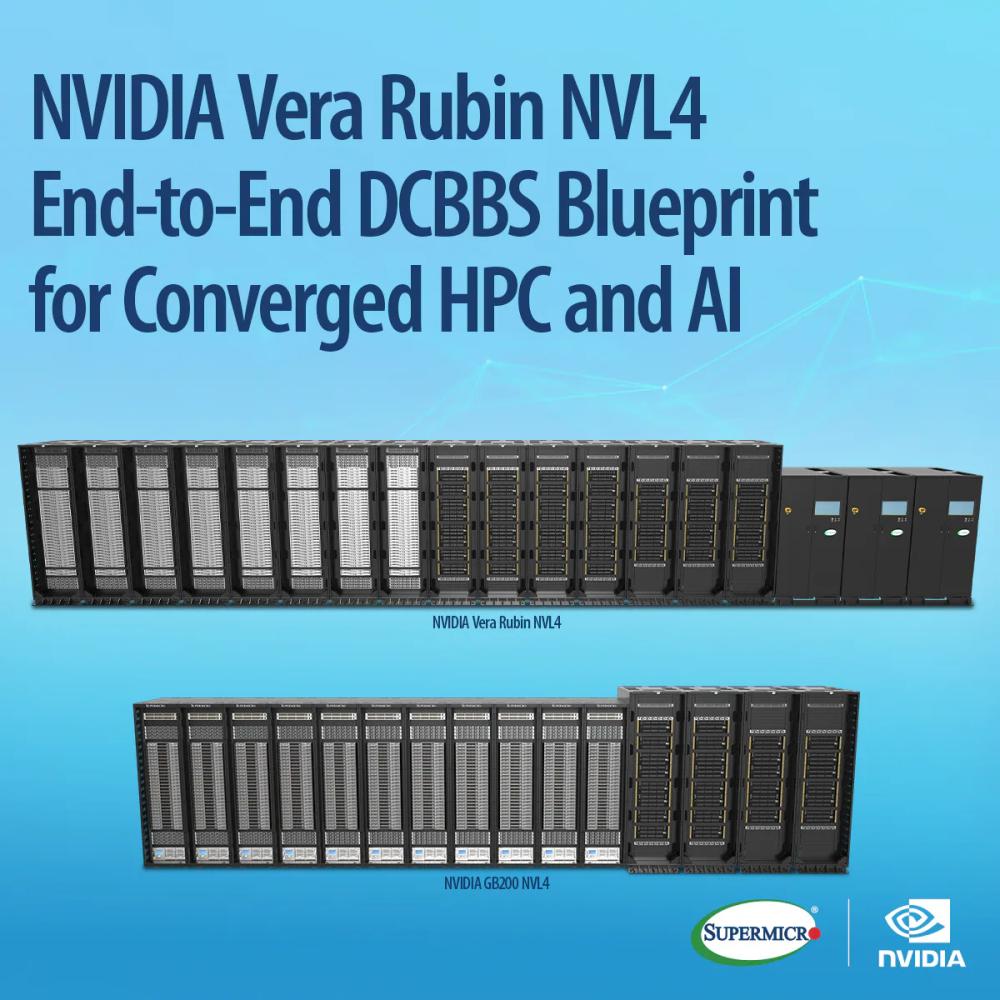 Native FP64 + AI in one node 1,152 Rubin GPUs · 576 Vera CPUs 3.2 MW Scalable Unit 362 kW racks · DLC-2
Converged HPC and AI projects rarely stall on GPU availability. They stall because the data hall cannot power, cool, connect and commission the cluster that was ordered. Supermicro's NVIDIA Vera Rubin NVL4 DCBBS blueprint answers that as one system — 288 nodes, Quantum-X800 InfiniBand, direct liquid cooling, busbar power and L10/L11 validation in a repeatable 3.2 MW block you can replicate as the site grows.
Why it matters
A platform is not yet a deploymentNVIDIA defines the architecture; the blueprint defines how to rack, cool, cable, test and commission it. That is where facility mismatch, cooling shortfalls and slipped go-live dates get designed out — before the order is placed.
What the guide covers
From site survey to first jobScalable Unit anatomy, NVL4 node balance, memory and fabric, 362 kW cooling and power, the five-stage deployment lifecycle, NVL4 vs NVL72 vs HGX Rubin NVL8 vs GB200 NVL4, plus a facility planning checklist for European deployments.
-
Posted: July 29, 2026Categories: General Topics and NewsRead more »
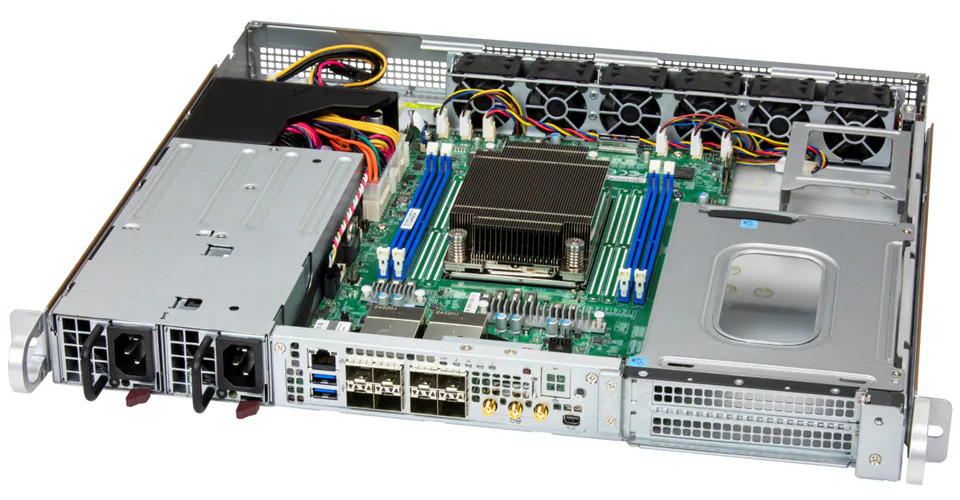 8× 25GbE SFP28 on-SoC Intel vRAN Boost 399 mm · front I/O
Telco and edge deployments rarely fail for lack of compute. They fail because the cabinet is too shallow, rear access is impossible, and every added NIC or accelerator becomes another integration problem. The Supermicro SYS-112D-40C-FN8P puts eight 25GbE ports and vRAN FEC acceleration inside the processor — so a 399 mm front-I/O 1U carries a full telecom workload with both PCIe slots still empty.
Why it matters
Three cards fewer per nodeEight 25GbE ports without add-in NICs, vRAN acceleration without a separate FEC card. Fewer part numbers, fewer spares and fewer failure points on every site you roll out.
What the guide covers
Ports, cabinets and rolloutFull port map, rack-fitting options including back-to-back mounting, four configuration examples, a comparison against edge boxes and rack servers, plus a cabinet deployment checklist.
-
Posted: July 14, 2026Categories: AI InfrastructureRead more »
 Liquid cooling · PUE toward 1.05 TCO vs TCE Supermicro × Intel webinar
Data centers consume a growing share of the world's electricity, and AI is accelerating it. This guide — a companion to our Green Computing at Scale webinar with Supermicro and Intel — shows how European teams cut data center energy costs with liquid cooling, Titanium power supplies and resource-saving architecture: which measures fit your site, how to estimate the payback, and what to send us for an energy-efficient Supermicro configuration.
Why it matters
Energy is now a procurement decisionEU electricity prices, CSRD reporting and AI rack density make efficiency measurable money: Supermicro states up to 40% cooling energy savings and PUE toward 1.05 versus the ~1.6 industry average.
The buyer angle
From payback model to EU quoteA 5-number payback model, a decision table for your situation and the exact quote inputs — SERVER SIMPLY returns a configuration, energy comparison and confirmed EU lead time.
-
Posted: July 09, 2026Categories: General Topics and NewsRead more »
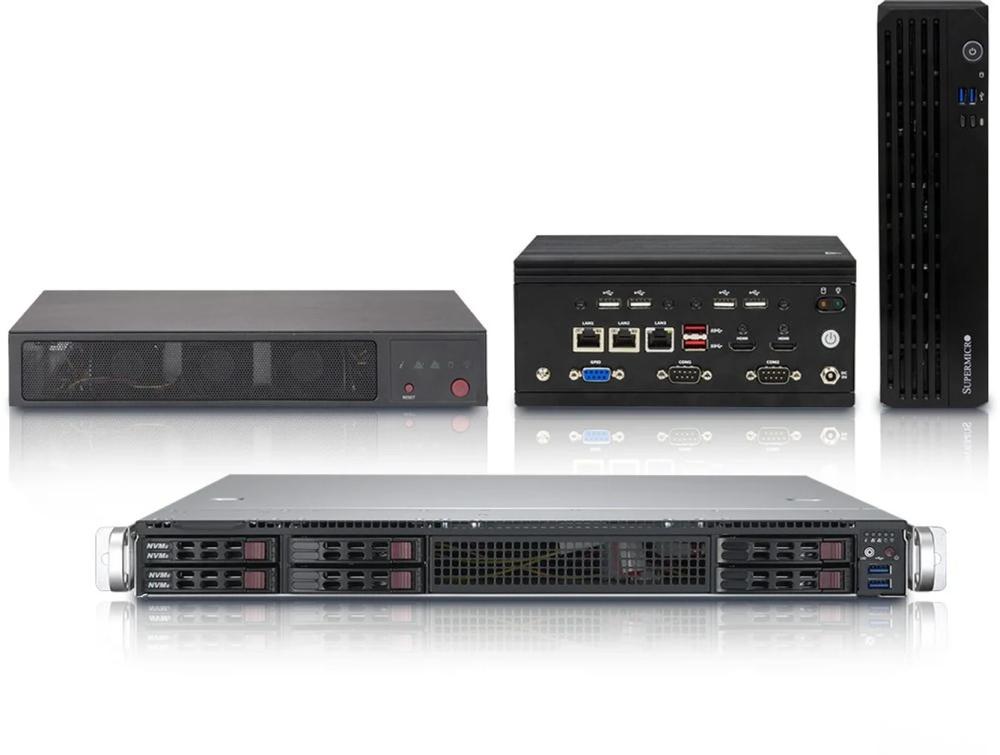 Intel Core Ultra Arc Pro B50 / B60 / B70 EU configuration & lead time
Supermicro has expanded its Intel-powered edge AI portfolio with the fanless SYS-E103-14P, the SYS-521AD-LN2 AI mini tower and refreshed short-depth edge platforms. This guide helps buyers compare which system fits industrial inference, local AI development, compact rack deployment and edge-to-core infrastructure planning.
Why it matters
Choose the right edge AI platform before deploymentHelps teams avoid mismatched GPU, power, cooling, form-factor and latency decisions when moving AI inference from the data center to factories, retail sites, vehicles and branch locations.
The buyer angle
Validate system, GPU and lead time in EuropeSERVER SIMPLY helps European teams configure Supermicro edge AI systems, compare Intel Arc Pro and NVIDIA options, confirm EU delivery and plan an upgrade path into central GPU infrastructure.
-
Posted: July 01, 2026Categories: General Topics and NewsRead more »
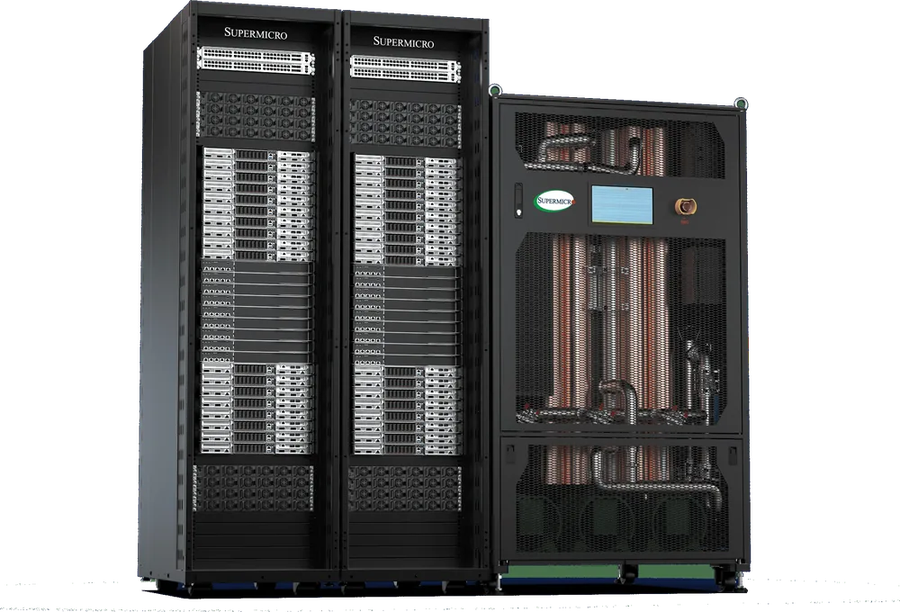 Liquid-to-Air · 200 kW No facility water loop N+1 redundant pumps
The Supermicro L2A Sidecar CDU brings up to 200 kW of liquid cooling into existing air-cooled data centers without requiring a primary facility water loop. It is built for AI and HPC teams that need dense GPU racks now, but cannot wait for a full facility liquid-cooling project. The Sidecar sits beside the rack, runs a closed coolant loop to the servers and rejects heat into room air.
Why it matters
The retrofit bridge to liquid-cooled AI racksHelps deploy high-density AI or HPC racks in air-cooled rooms while avoiding cooling towers, primary water loops and facility-wide plumbing work.
The buyer angle
Validate CDU + GPU rack before purchaseSERVER SIMPLY helps European teams size the Sidecar to real rack heat load, configure matching GPU servers and validate EU delivery and lead times.
-
Posted: June 29, 2026Categories: General Topics and NewsRead more »
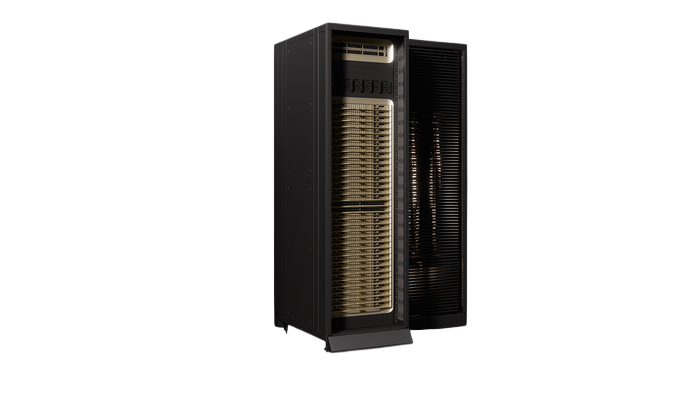 256 Vera CPUs · 22,528 cores Up to 400 TB LPDDR5X 48U · 100% liquid-cooled
The NVIDIA Vera CPU Rack is a dense, 100% liquid-cooled 48U MGX system that packs 256 Vera CPUs — 22,528 Olympus cores, up to 400 TB of LPDDR5X and 64 BlueField-4 DPUs — to run the CPU-side work behind agentic AI: code execution, tool calls and reinforcement-learning sandboxes across more than 22,500 parallel environments. It is built to run alongside GPU racks, not replace them.
Why it matters
The CPU execution layer for agentic AIStops the CPU side — sandboxes, tool calls and RL environments — from starving expensive GPU capacity, sharing the same liquid-cooled facility as Vera Rubin or GB300 racks.
The buyer angle
GA in 2026 · plan CPU + GPU togetherNeed agentic AI capacity before Vera ships? Deploy current-gen CPU and GPU now and phase in Vera — EU delivery and binding lead times from SERVER SIMPLY.
-
Posted: June 10, 2026Categories: General Topics and NewsRead more »
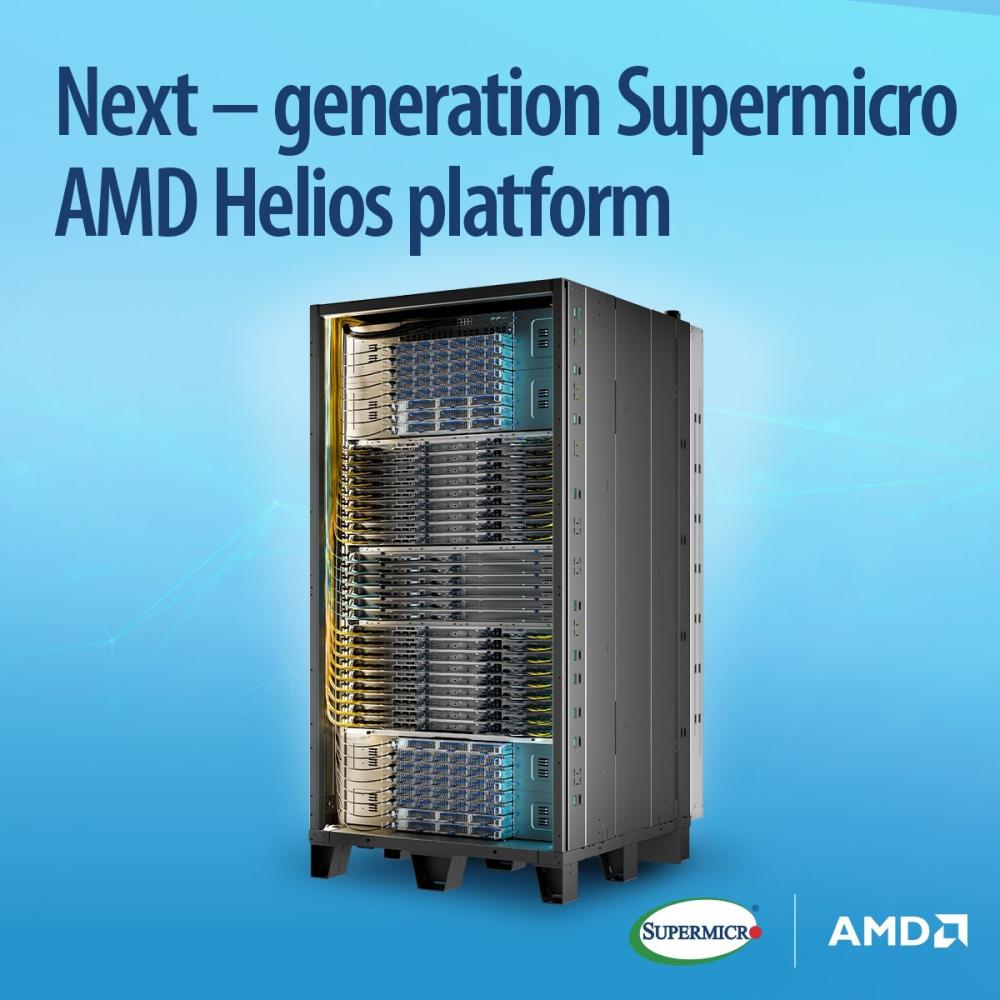 72× Instinct MI455X HBM4 · ROCm Open UALink + Ultra Ethernet
At Computex 2026, Supermicro expanded its rack-scale AI portfolio with the AMD Helios platform — a 72-GPU double-width rack built on AMD Instinct MI455X GPUs, 6th Gen EPYC “Venice” CPUs and AMD Pensando networking, unified by the open ROCm stack. A single rack delivers up to 2.9 FP4 exaFLOPS, 31 TB of HBM4 and 1.4 PB/s of aggregate bandwidth at peak.
Why it matters
An open alternative to NVIDIA NVL72Scales up over Infinity Fabric + UALink and out over Ultra Ethernet, on ROCm — open standards instead of proprietary NVLink, InfiniBand and CUDA.
The buyer angle
432 GB HBM4 per GPU · GA in 2H 2026Per-GPU memory ahead of NVIDIA's B300 (288 GB). Need capacity now? Deploy AMD Instinct today and phase in Helios — EU delivery and lead times from SERVER SIMPLY.
-
Posted: June 03, 2026Categories: General Topics and NewsRead more »
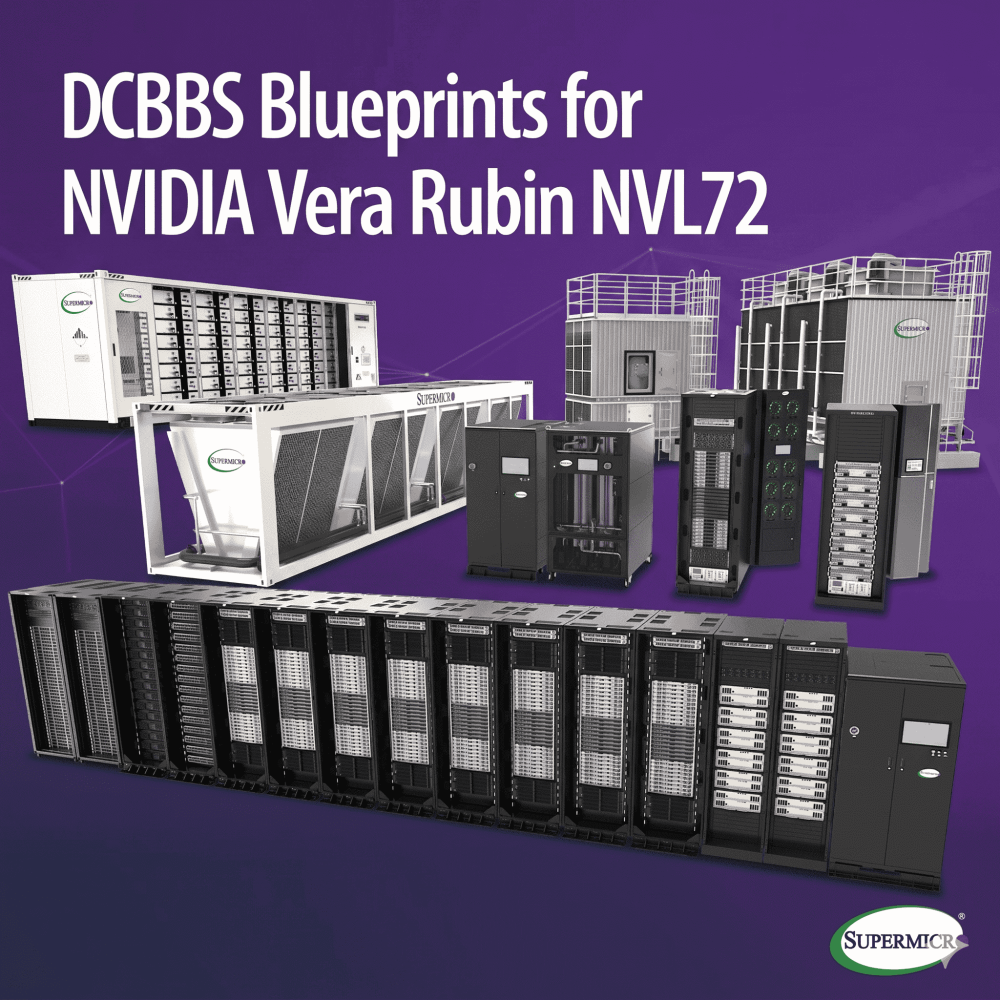 NVIDIA Vera Rubin NVL72 HBM4 · 1,152 GPUs 5 MW to 1 GW
At Computex 2026, Supermicro introduced DCBBS Blueprints for the NVIDIA Vera Rubin NVL72 and HGX Rubin NVL8 — pre-engineered, end-to-end AI factory designs built around a 1,152-GPU scalable unit with 331 TB of HBM4, DLC-2 liquid cooling and full power and networking, scaling from a 5 MW pilot to a 1 GW deployment.
What's inside
One validated building block, any scale16 compute racks, NVMe and context-memory storage, DLC-2 cooling, 5 MW–1 GW power and Spectrum-X / Quantum-X800 networking — repeatable to almost any size.
Why it matters
Doubles bandwidth over BlackwellVera Rubin roughly doubles GPU memory, NVLink and per-GPU networking bandwidth vs Blackwell — with deployments aligned to NVIDIA Vera Rubin GA in 2H 2026.
-
Posted: May 26, 2026Categories: General Topics and NewsRead more »
 NVIDIA NemoClaw + OpenClaw OpenShell Sandboxing DGX Spark · Super AI Station
NVIDIA NemoClaw is an open-source reference stack that wraps OpenClaw inside the NVIDIA OpenShell sandbox and gateway — controlling filesystem access, credentials, network egress and audit logs. It turns an unrestricted local AI agent into a governed enterprise service that can run 24/7 on hardware from a laptop to a Supermicro NVIDIA DGX Spark or Super AI Station.
Who it is for
Enterprises running always-on local AI agentsBuilt for teams that need sandboxing, secrets management and policy enforcement before deploying agents on company data, code or production systems.
Why it matters
Prompt-injection defence and governance built inNemoClaw blocks credential leakage, host filesystem access and unauthorised network calls — even when an agent is convinced to misbehave by malicious input.