We use cookies to make your experience better. To comply with the new e-Privacy directive, we need to ask for your consent to set the cookies. Learn more.

Datacenter Networking: The Backbone of Your Business Infrastructure

Posted:
September 04, 2024
Categories:
General Topics and News
Datacenter Networking: The Backbone of Your Business Infrastructure
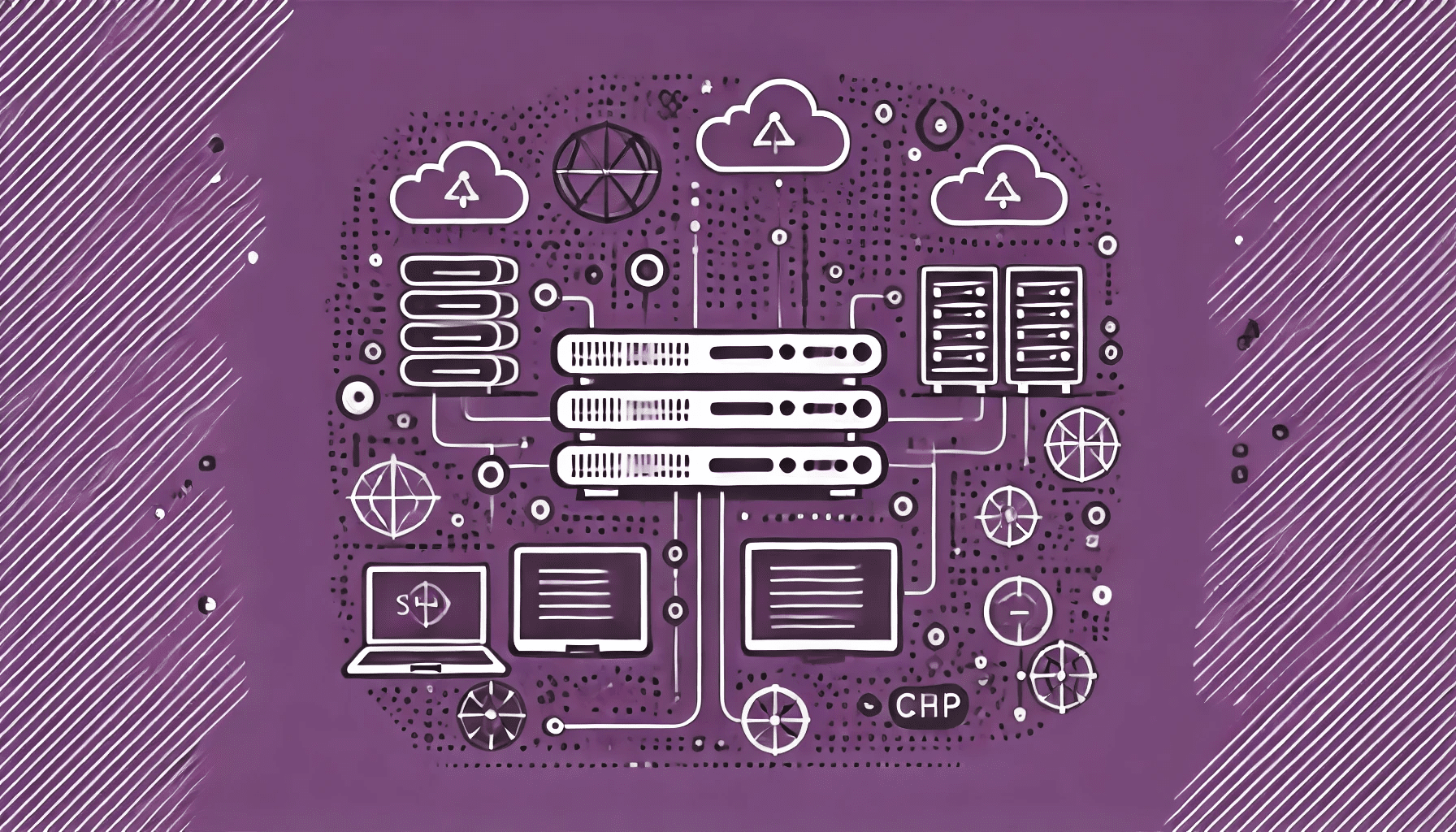
In today’s hyperconnected world, the efficiency of your IT infrastructure is directly tied to the capabilities of your datacenter network. As businesses continue to generate massive amounts of data, the demand for faster, more secure, and highly scalable networking solutions is critical. Datacenter networking ensures that servers, storage systems, and mission-critical applications communicate seamlessly, supporting high-performance environments and real-time data processing.
At Server Simply, we provide custom servers and networking solutions specifically designed to meet the evolving needs of businesses, from small enterprises to large data-driven organizations. In this blog, we delve into the specifics of datacenter networking and focus on applications such as networks for storage, virtualization, High-Performance Computing (HPC), and AI-driven networks.
What is Datacenter Networking?
Datacenter networking refers to the interconnected infrastructure within a datacenter, typically composed of core networks, access networks, and carrier networks. In this context, core networks handle the communication between servers and storage systems, while access networks manage end-user interactions and carrier networks connect the datacenter to external service providers.
The primary objective of datacenter networking is to facilitate the low-latency, high-throughput transfer of data between servers, storage devices, and application platforms. It is also responsible for ensuring that mission-critical applications, such as virtualization platforms and AI workloads, have access to the resources they need in real time. This demands not only high-performance switches and routers but also robust security and redundancy measures to prevent downtime or data loss.
Key Features of Datacenter Networking
- Core Network Infrastructure: The backbone of any datacenter, core networks are designed to handle the massive volume of traffic between servers and storage systems. Using high-speed Ethernet switches core networks ensure the scalability and low latency required for high-performance applications.
- Redundancy and High Availability: To ensure uninterrupted services, datacenter networks must include redundant paths and high-availability protocols such as HSRP (Hot Standby Router Protocol) and VRRP (Virtual Router Redundancy Protocol). These enable failover capabilities that maintain uptime even in the event of network component failure.
- Network Segmentation: Using VLANs (Virtual LANs) and VXLANs (Virtual Extensible LANs), datacenter administrators can create isolated segments within the network to improve security, enhance performance, and optimize traffic flow for specific applications like HPC and AI.
- Scalability: Datacenter networks are designed for horizontal and vertical scalability, allowing businesses to expand their capacity by adding more servers or increasing bandwidth. Solutions like leaf-spine architecture offer the flexibility to scale as needed, ensuring the network grows with the business.
- Advanced Security Features: Datacenter networks implement firewalls, intrusion detection systems (IDS), and encryption protocols to protect against cyber threats. These security measures are integrated into both physical and virtual networking components to guard against external attacks and internal vulnerabilities.
How Datacenter Networking Supports Key Applications
1. Networks for Storage
In modern datacenters, high-speed, low-latency storage networks are crucial for handling the large volumes of data generated by applications. Storage Area Networks (SANs) or Network Attached Storage (NAS) solutions are deployed to connect servers to storage devices, using Ethernet or Fibre Channel technologies. Our MSN4600-VS2FC NVIDIA is optimized for high-performance storage networking, supporting RoCE (RDMA over Converged Ethernet) to deliver low-latency, high-bandwidth connectivity required for storage-intensive applications.
2. Networks for Virtualization
Virtualization technology allows multiple virtual machines (VMs) to run on a single physical server, maximizing resource utilization and reducing hardware costs. To support virtualization, datacenter networks must provide high-bandwidth, low-latency connections between virtualized resources. Software-defined networking (SDN) plays a critical role here, enabling dynamic network provisioning and enhancing agility by allowing the network to adapt to the changing demands of virtualized environments.
3. Networks for High-Performance Computing (HPC)
HPC applications, such as scientific simulations, financial modeling, and data analytics, demand extremely fast data processing and high-bandwidth networking to move data between compute nodes. InfiniBand and Ethernet fabrics are commonly used in HPC environments to meet these requirements. Our NVIDIA Mellanox Ethernet switches offer the ultra-low latency and high throughput required to support HPC workloads, enabling efficient computation and data transfer at scale.
4. Networks for Artificial Intelligence (AI)
AI workloads, particularly deep learning, generate massive amounts of data and require high-bandwidth, low-latency connections between GPU clusters and data storage systems. Datacenter networks designed for AI applications often use RDMA (Remote Direct Memory Access) technologies and NVMe over Fabrics (NVMe-oF) to accelerate data transfers, allowing for faster model training and inference.
Key Challenges in Datacenter Networking
Datacenter networking presents several challenges that must be addressed to ensure optimal performance and reliability:
- Scalability: As data volumes grow, networks must scale seamlessly to support increased demand. Implementing leaf-spine architectures helps ensure scalability without bottlenecks.
- Latency: Low-latency networking is critical for applications such as HPC, AI, and real-time analytics. RoCE and InfiniBand technologies are employed to reduce data transmission delays.
- Security: With the rise in cyber threats, implementing multi-layered security strategies, including encryption, firewalls, and network segmentation, is essential to protect sensitive data.
Emerging Trends in Datacenter Networking
The future of datacenter networking is being shaped by a range of new technologies and architectures designed to handle evolving workloads and the exponential growth in data traffic. One such trend is the adoption of hybrid and multi-cloud environments, where businesses leverage both on-premise infrastructure and cloud-based services. This shift requires highly flexible and dynamic networking solutions that can seamlessly connect different environments. Edge computing is another area gaining prominence, bringing data processing closer to the source of data generation, reducing latency, and enhancing real-time decision-making. Additionally, 5G integration promises to revolutionize datacenter networking by enabling faster, more reliable connections for IoT devices and AI-driven applications. These trends underscore the need for scalable, adaptable networks that can efficiently support future IT and business demands.
Conclusion
Datacenter networking is the foundation of modern IT infrastructure, supporting a wide range of critical applications such as virtualization, storage, HPC, and AI. At Server Simply, we offer networking solutions that are built to optimize your datacenter’s performance, security, and scalability. From high-performance Ethernet switches to advanced storage networks, our team is ready to design and implement solutions that meet the demands of your business’s evolving needs.
Contact us today to learn more about how our tailored networking solutions can empower your business and ensure you're prepared for the future of IT infrastructure.
Related Products

Comment(s)